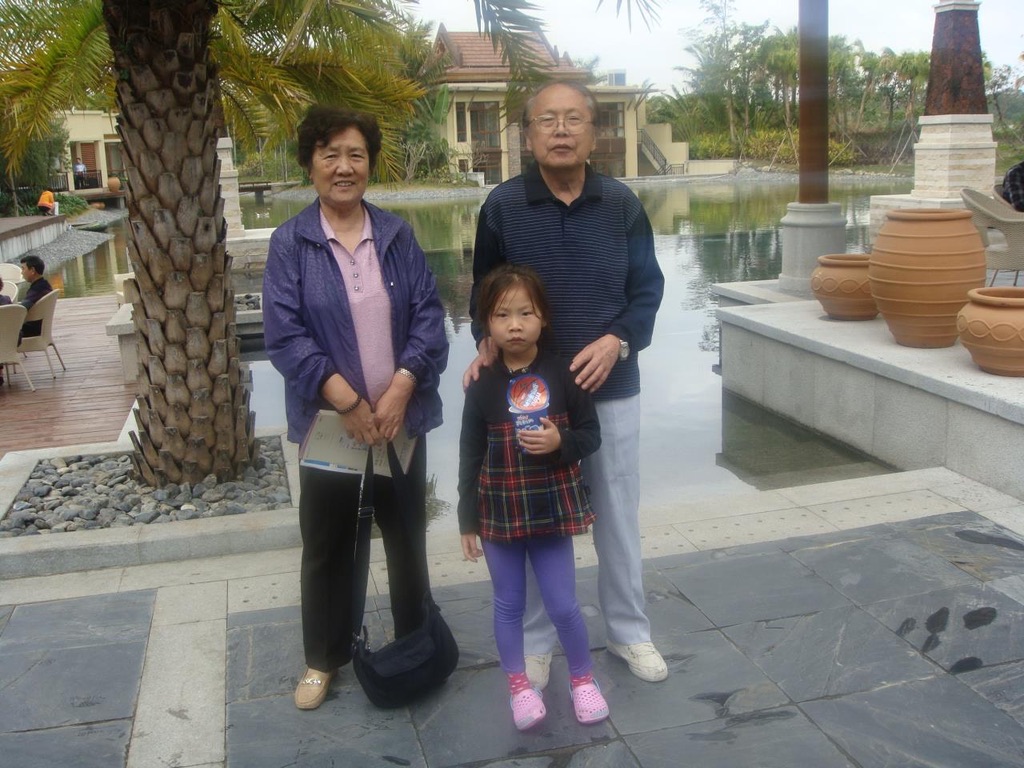
I first drank douzhi when I was seven.
That summer, my mom sent me to stay with my grandparents for two weeks. They lived in the south of the HaiDian; we lived in the east. Both in Beijing, yet we only saw each other once a year. There were things between the adults that I never asked about. I only knew that every time I stepped into their apartment, everything was unusually clean. There would be fruit on the coffee table I had never seen before. Grandma would hurry out of the kitchen, wiping her hands on her apron, then stand there as if unsure what to do next.
At the door, my mom reminded me to “behave.” The way she spoke to Grandma was more polite than usual. That kind of politeness I only used at school when talking to a classmate’s parent I didn’t know well. When the door closed, the apartment suddenly felt quiet. There were no toys for me to play with. The television only had a few channels. I sat on the edge of the sofa, my feet not touching the floor, swinging in the air.
It was only later that I slowly understood: they were offering me everything they believed was good.
On the first morning, breakfast was already set on the table. Golden fried dough rings, shredded pickled vegetables, and two bowls of gray-green douzhi. The dough rings were crisp and glossy, arranged neatly on a small plate like little bracelets. The pickled vegetables were finely cut and dressed with sesame oil. Grandma nudged the bowl of douzhi toward me. The veins on the back of her hand stood out slightly, and the silver bracelet on her wrist tapped against the bowl with a soft clink.
“Try it. It’s the taste of old Beijing.”
I lifted the bowl. It was cold. The color resembled rainwater pooled in the street, gray with a hint of green. Soy pulp floated thickly in the liquid. When I leaned closer, a sour smell rushed straight into my nose. It wasn’t the bright, appetizing sourness of vinegar. It was the heavy, humid smell you get when lifting the lid off a garbage bucket on a hot day. I didn’t have many words back then. The only one that came to mind was “spoiled.”
I took a small sip.
Cold. Sour with a trace of bitterness, slightly astringent. Like dishwater after the third rinse, when the brush bristles were already worn down. My tongue instinctively recoiled. My throat tightened. I held my breath and forced myself to swallow.
Then I set the bowl down and couldn’t say a word.
Grandpa didn’t notice. He was already sipping from his bowl, biting into a dough ring with a loud crunch, flakes scattering down his shirt. He didn’t brush them away. He picked up some pickled vegetables with his chopsticks and took another sip, eyes narrowing slightly. Grandma drank slowly, small sips at a time, as if she were tasting something precious. They didn’t explain the history of douzhi. They didn’t say it was “the root of old Beijing.” They simply drank it, the way one breathes.
During those two weeks, I drank it three times.
Each time, they pushed the bowl toward me with quiet smiles. There was nowhere to escape. The table was small, and their expectation felt like another dish placed firmly in front of me. My mom told me over the phone that my grandparents loved me; they just didn’t know how to show it. I didn’t understand then. I only thought: if love tastes like this, love is hard to swallow.
But I drank it anyway. When I swallowed, I could hear the sound in my throat. Grandpa nodded when he saw the empty bowl and slid the plate of pickled vegetables closer to me.
When I visited again at ten, I had learned to hide my reactions.
I no longer frowned when taking the bowl. I sipped quietly and swallowed without expression, like someone pretending to take medicine while secretly tucking the pill under the tongue. Grandpa didn’t say anything when I finished, but the slight smile in the corner of his eyes gave him away. He broke a dough ring in half and handed me one piece. I took it and chewed. The dough ring really was good—crisp, light, not greasy.
I still disliked douzhi. But I began observing them.
Grandpa never drank it alone. He always paired it with a dough ring. He would bite into the hot, crunchy ring and immediately follow it with a sip of the cold, sour douzhi, letting the two textures meet in his mouth. Later, I realized it was a rhythm his body had memorized over a lifetime. Like someone who must eat porridge with pickles, or soy milk with fried dough sticks. It required no thought. The body simply knew.
Grandma never drank without doing something else. She would sip while sorting vegetables, folding clothes, or talking about neighborhood news. “The old man at Li’s place made the douzhi too sour today.” “Sun’s daughter-in-law is pregnant and can’t drink it anymore; says it makes her nauseous.” She seemed to soak these small daily stories into the douzhi and swallow them together.
One morning I woke up early, around six, and wandered to the kitchen half-asleep. Grandma was placing the thermos on the table. Grandpa was taking bowls from the cabinet. They didn’t speak. Grandma twisted open the lid, pouring the douzhi into the bowls. The gray-green liquid swirled as steam rose. Grandpa took his bowl and sat down on the small stool, biting into a dough ring.
Sunlight slanted through the slightly greasy window, falling onto the floor between them. Grandpa wore his old stretched-out white undershirt. Grandma still had her apron on. They sat there drinking, not chatting, not looking at each other, simply drinking.
I went back to bed and pretended I hadn’t woken up.
That image stayed with me for a long time. Douzhi, for them, wasn’t nostalgia. It wasn’t a symbol. It was simply another ordinary day in a life they had been living together for decades—and were still living.
At some point, I don’t know when, the bowl stopped being placed in front of me.
Instead, there was sweet-and-sour ribs, scrambled eggs with tomatoes, the kind of braised pork my mom often cooked at home. Grandpa would still pour himself a bowl of douzhi and drink it with pickled vegetables, but he no longer urged me to try. Grandma would move my favorite dishes closer and say, “Eat more. You’re growing.”
None of us mentioned it.
It felt as though those years of pushing and swallowing, of offering and accepting, had been a silent play performed between us. When the curtain fell, the scene changed, but no one left the stage.
Later, I grew up. I went abroad for school, and the times I return home are now fewer than the visits I once made to my grandparents. The physical distance has widened, yet somehow the closeness feels steadier. We manage to video call every few weeks.
I still don’t like douzhi. I doubt I ever will. I still don’t understand what they taste in it, what memory or comfort rests at the bottom of that gray-green bowl.
But I understand this much: some flavors are not meant to be shared. Some things are loved simply because they belong to someone you love. And sometimes, sitting at the same table—each holding a different bowl—is enough.
 Amy's Memoir