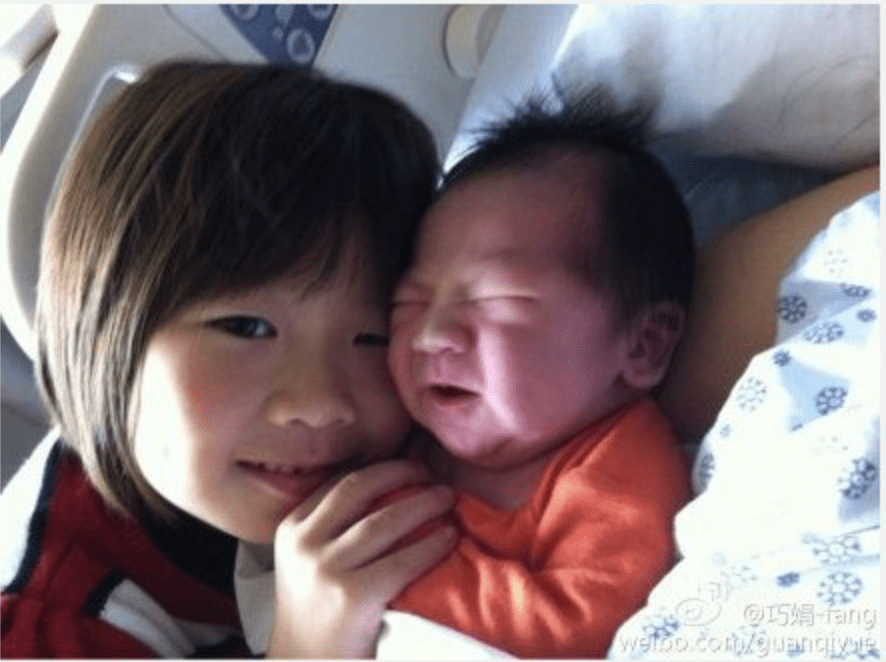
(The day my brother was born.)
I have always loved snowy days.
When snow falls, the whole world seems to lower its volume. All the noise—cars, voices, the wind scraping against bare branches—gets absorbed, layer after layer, by something soft and invisible, until only the faint whisper of snowflakes drifting down remains, like the sky breathing quietly. Even my own footsteps grow slower, softer, as if I am walking inside a thick dream. As a child, I would press my entire face against the cold glass window, breathing out a small circle of fog, watching those white spirits descend one by one, unhurried, from the endless gray clouds. They spun and fluttered; sometimes they lingered in the air, sometimes they fell straight down. Back then, I was certain that somewhere above us, an invisible giant was secretly and generously sprinkling white sugar over the world.
The first winter after my brother learned to speak, he pointed at the empty sky outside the window and asked in blurred but determined syllables, “What’s that?”
Without looking up, I answered, “Clouds.”
He shook his head and pointed stubbornly. “Not clouds. It’s… coming down.”
Only then did I realize he meant snow. He had seen snow drawn in picture books.
“That’s snow,” I said.
“What is snow?”
I was absorbed in my game console at the time, my eyes fixed on the screen. “It’s something cold and white. When you see it, it makes you happy.”
He nodded as if he understood, though perhaps he didn’t. But a few days later, when the sky darkened again, he would come over with the same curious eyes and ask, “Amy, what is snow?”
Later, his questions began to grow like vines, stretching in every direction.
“Why do people need to drink water?”
“Why do we have to go to school?”
“Why do adults have to work?”
“What is work?”
“Why does work make people sigh?”
His eyes were as clear as an undisturbed lake. Every question was like a pebble dropped into its center, waiting for ripples of understanding.
But I often brushed him off. When I grew irritated, I would say, “Stop asking. I don’t know either.” More often, I used the phrase, “You’ll understand when you’re older.” As if “later” were a storage room where all unanswered “whys” could be placed temporarily and never retrieved.
It wasn’t that I didn’t have answers. It was that I had never seriously considered the weight of those questions. Once, they had flickered in my own mind too. But now, curiosity in me had become like an old piece of clothing—worn out and tossed aside in some corner of growing up, covered in the dust of “immaturity.” I was busy preparing for exams, busy making friends, busy clearing levels in virtual worlds, busy becoming what looked like a competent adult—an adult who no longer questioned what seemed obvious.
Until the winter when he was three, and the snow came.
It had started falling the night before. By morning, the world had been completely reshaped. Every outline in the yard was wrapped in soft white. I stepped outside with a heavy metal shovel to clear a path. The blade scraped against the ground with a sharp, dragging sound that felt almost too loud in the stillness.
My brother stood at the doorway, bundled in a blue padded coat that made him look like a rice dumpling, wearing a hat with a little pom-pom on top. He was still small then, needing to spread his feet slightly just to stand steady. Usually he chattered like a sparrow, never running out of questions. But at that moment, he was unusually quiet. He didn’t roll in the snow as I expected. He didn’t ask anything. He simply stood there, head tilted upward, watching the snow fall, watching this world that had been completely washed white.
I paid little attention and assumed the cold had frozen his liveliness. I focused on shoveling, pushing the snow aside bit by bit.
Time passed quietly with the falling snow. I don’t know how long it had been when I paused to catch my breath. That was when I heard him say softly, almost like a sigh:
“So… this is snow.”
It wasn’t a question. It was a discovery.
I froze, my hands gripping the cold handle of the shovel, and turned around.
His cheeks were red from the cold, like small autumn apples. And his eyes—I had never seen that look before. So bright. So focused. As if all the light in the world had gathered inside them.
In that instant, it felt as though a snowflake had fallen directly into my chest, its chill melting and awakening something that had been asleep for a long time. I suddenly realized with startling clarity: he was living through his first time.
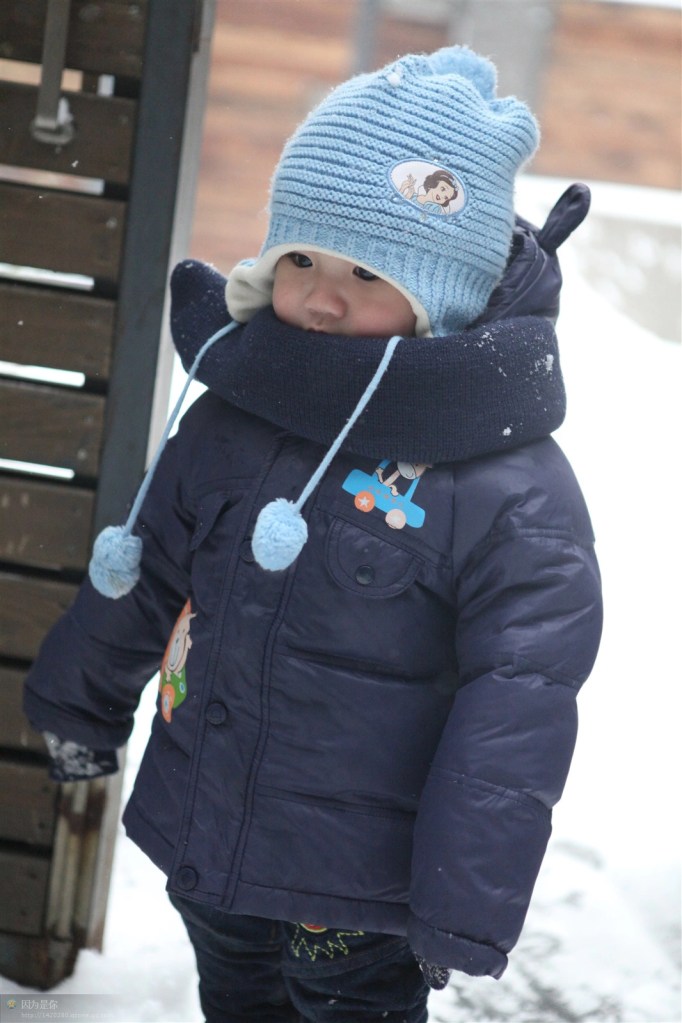
The first time seeing real snow.
The first time connecting the word “snow,” heard countless times before, with something cold, damp, white, something that could gather and melt.
The first time using all his senses to verify a concept that had only existed in books and adult explanations.
The first time discovering that the world was more concrete—and larger—than he had imagined.
And me?
When was the last time my heart had stirred because of snow itself? When was the last time I studied the shape of a snowflake? When was the last time a simple natural phenomenon made something inside me tremble?
Snow had long since become ordinary to me. It meant putting on thicker clothes. It meant slippery roads. It meant taking a few photos and posting them. It meant winter had arrived. It had become a calendar event, a background setting in daily life, a chain of practical associations. The only thing it was no longer was a miracle.
In The Little Prince, it says that grown-ups are only interested in numbers. They ask how much a house costs but not how many roses bloom outside its window. They care about your test scores but not whether you cried while reading a book. A quiet guilt spread through me.
My brother’s questions—“Why drink water?” “Why go to school?” “Why work?”—were never meaningless. They were his small antennae reaching out, awkwardly but sincerely touching the edges of this vast world. Each “why” was a brick in the structure of his understanding.
And my answers were becoming careless sketches—hurried, vague, eager to be finished. What frightened me was not his curiosity, but the way his questions reflected my growing fatigue and indifference.
When did I stop caring about “why”?
When did I begin to prefer scrolling endlessly over thinking deeply?
When did my explanations of the world become so dry and practical, stripped of all poetry?
The snow eventually stopped. The world was silent and white. I stood in the yard, looking at the dark, winding path I had carved through the untouched snow. It cut sharply through the white blanket, exposing the hard ground beneath. Suddenly I felt ashamed. What else was I cutting through with my shovel of habit? Was I, without realizing it, flattening the sense of wonder forming in his heart?
He still asks questions. He still gets excited when he sees ants carrying food, still gasps at rainbows after storms, still lights up when he realizes something new.
And I, in the quiet fall of snow, saw the outline of myself becoming rigid—someone slowly losing curiosity, someone closing the door to miracles, someone rushing to fit into the invisible frame called “adulthood.”
After that day, I did not transform overnight. I still get annoyed when he asks too many questions. I still feel tired. But something shifted. Whenever he asks a “why” that I instinctively want to avoid, I hear again that soft voice from that snowy morning:
“So this is snow.”
Perhaps the most dangerous loss in growing up is not innocence itself, but the extinguishing of the flame that asks questions. When we stop being curious, the world truly grows old.
Snow will melt every year.
My brother will continue to grow. His questions will change, but I hope the light in his eyes does not.
And I am learning something now: in this hurried passage of time, how to slow down—just a little—so I do not become too quickly an adult whose heart no longer stirs at snow.
 Amy's Memoir